Pope John Paul I The Mysterious Smile Behind History
Table of Contents
- The Formative Years of Albino Luciani: From Canale d'Agordo to the Priesthood of Pope John Paul I
- Family Background and the Cultural Landscape of Canale d'Agordo
- Theological Studies and Intellectual Foundations
- Comparative Timeline: Pope John Paul I’s Early Life vs. Pope John Paul II
- Military Chaplaincy and the Impact of World War II
- Papacy: A Brief but Transformative Reign (1978)
- The Conclave and Election Dynamics
- Symbolism and Motto: Humility and Charity in Papal Iconography
- Key Speeches and the First Major Audience: A Papacy of Dialogue
- Planned Reforms and the Vision for a Renewed Church
- Controversies and Speculations: The "Smoking Hat" and Theories of His Death
- Three Planned Encyclicals: Audience, Focus, and Theological Emphasis
- Theology and Spiritual Teachings: The "Smiling Pope" and His Incarnational Vision
- Incarnational Theology: God in the Mundane and the Marginalized
- Pastoral Style: Humor, Simplicity, and Relatable Theology
- Ecumenism: Bridging Divides with Eastern Orthodox and Protestant Denominations
- Social Justice: A Theology of the Poor and Workers
- Moral Theology: Conscience, Mercy, and Personal Responsibility
- Devotion to the Virgin Mary: "Our Lady of the Way"
- Legacy and Cultural Impact: The "Pope of the People" and His Enduring Influence
- Cultural Imprint: A Papacy of Warmth and Simplicity
- Investigations into His Death: Medical Findings and Conspiracy Theories
- Public Mourning: A Global Outpouring of Grief
- Influence on Subsequent Popes: A Legacy of Pastoral Simplicity and Ecumenism
- Comparative Analysis: Public Image of John Paul I Versus His Predecessors and Successors
- Mysteries and Unsolved Questions: The Enigma of Pope John Paul I’s Death
- Official Medical Findings and Autopsy Discrepancies
- Eyewitness Accounts and Inconsistencies in Vatican Testimonies
- Political Theories and Cold War-Era Suspicions
- Vatican’s Handling of the Investigation and Information Delays
- Timeline of Key Events and Statements Surrounding His Death
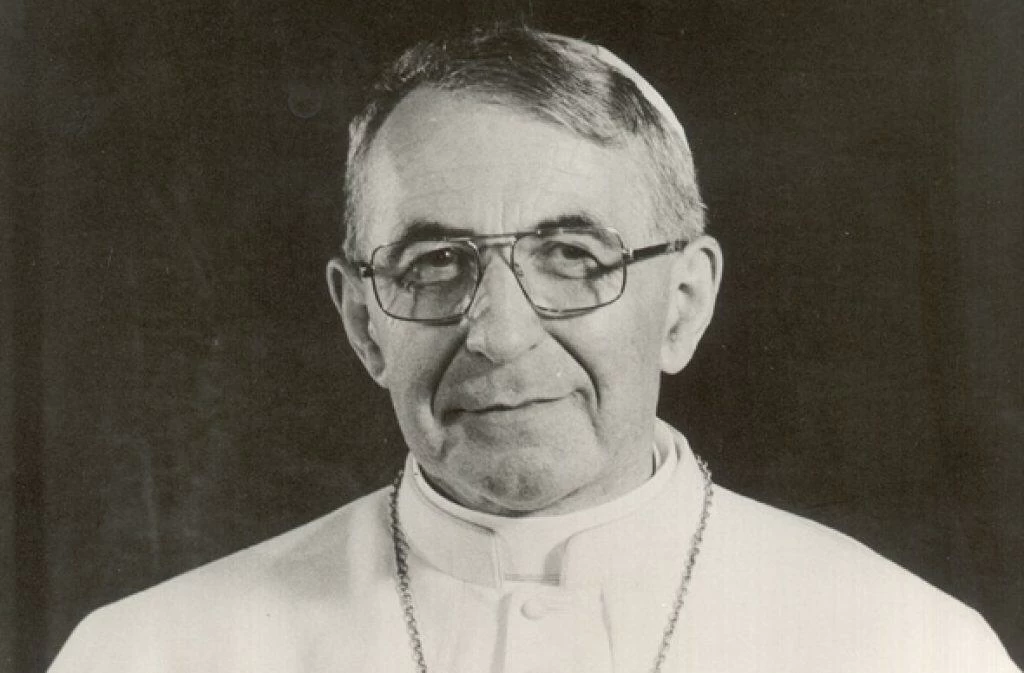
Amidst the grandeur of Vatican politics, Albino Luciani emerged as Pope John Paul I, a figure whose 33-day papacy left an indelible mark on history despite its brevity. Born in the quiet Alpine village of Canale d'Agordo, Italy, his life story unfolded against the backdrop of World War II, fascist regimes, and the transformative winds of Vatican II—a period that shaped his pastoral humility and theological vision. Unlike his predecessors, Luciani rejected the trappings of papal authority, opting for simplicity, warmth, and a deep connection with ordinary believers, earning him the affectionate title "the smiling pope."
His election in 1978 followed the tumultuous conclave that saw the rapid succession of Popes Paul VI and John Paul II’s predecessor, John Paul I’s brief reign became a symbol of hope and renewal in an era marked by Cold War tensions and ecclesiastical upheaval. Yet, his sudden death on September 28, 1978, shrouded in mystery, ignited global speculation, conspiracy theories, and a legacy that continues to captivate historians, theologians, and the faithful. Beyond the Vatican’s walls, his teachings on mercy, ecumenism, and the Church’s role in modern society resonated far beyond his short tenure, leaving an enduring question: What might have been if history had allowed him more time?

The Formative Years of Albino Luciani: From Canale d'Agordo to the Priesthood of Pope John Paul I

Albino Luciani, the future Pope John Paul I, was born on October 17, 1912, in the small mountain village of Canale d'Agordo in the Dolomites region of northern Italy. His early life was deeply rooted in the rural Catholic traditions of the Veneto, a region marked by its devotion to the Church, agricultural lifestyle, and resistance to the secularizing forces of the 20th century. The Luciani family, though modest, was steeped in faith—his father, Giovanni Battista, was a carpenter and devout layman, while his mother, Bortola Tancon, instilled in him a sense of humility and service. This environment shaped Luciani’s spiritual sensibility, fostering a lifelong commitment to simplicity and pastoral care. His childhood in Canale d'Agordo, nestled between the Alps and the cultural crossroads of Italy and Austria-Hungary, exposed him to a blend of Ladin and Italian influences, reinforcing his identity as a man of the mountains yet universally connected to the Church.
The Dolomites, with their stark beauty and harsh winters, became more than a geographical backdrop; they symbolized Luciani’s resilience and his ability to find divine presence in the ordinary. His early education at the parish school in Canale d'Agordo laid the foundation for his intellectual and theological development, while his first encounters with the priesthood during religious festivals and village celebrations ignited his vocation. By the age of 12, Luciani was already assisting in the local church, a sign of his deepening call to priestly life. His decision to enter the seminary was not a sudden revelation but a gradual unfolding of a path he had walked since childhood.
Family Background and the Cultural Landscape of Canale d'Agordo
Albino Luciani’s family was a microcosm of the Veneto’s Catholic ethos. His parents, Giovanni Battista and Bortola, were devout but not wealthy, living in a modest home in the heart of Canale d'Agordo. The village, with its population of around 2,000 at the time, was a close-knit community where faith permeated daily life. The Luciani household was marked by frugality and prayer, with Albino often seen helping his father in the workshop or accompanying his mother to Mass. This upbringing instilled in him a profound sense of duty and a deep respect for the sacramental life of the Church.
The cultural influences of the region were equally formative. The Dolomites, a UNESCO World Heritage site, were not just a physical landscape but a spiritual one for Luciani. The Ladin language, spoken by some locals, added a linguistic and cultural layer that distinguished the region from the rest of Italy. This multicultural exposure—Italian, Ladin, and the broader European influences of the Alps—shaped Luciani’s worldview, making him both a product of his environment and a bridge between different traditions. His later pastoral approach would reflect this synthesis: grounded in local traditions yet open to universal dialogue.
The political climate of the time also left its mark. Italy was undergoing rapid changes, from the rise of fascism under Benito Mussolini to the growing tensions in Europe that would soon erupt into World War II. Canale d'Agordo, while remote, was not untouched by these forces. The Luciani family, like many in the region, navigated a delicate balance between loyalty to the Italian state and their unwavering faith in the Church. Albino’s early exposure to these tensions would later influence his pastoral sensitivity, particularly in his role as a military chaplain during the war.
Theological Studies and Intellectual Foundations
Luciani’s formal theological education began at the age of 14 when he entered the Seminary of Feltre, a prestigious institution in the Veneto region. His academic journey was marked by both rigor and humility. He excelled in philosophy and theology, but his true strength lay in his ability to integrate intellectual discipline with pastoral compassion. His mentors, including Father Giuseppe Piazzi, recognized his potential early on, guiding him toward deeper studies.
In 1935, Luciani was ordained a priest at the age of 23 in the Cathedral of Belluno. His ordination coincided with a period of significant upheaval in Italy, as Mussolini’s fascist regime sought to control all aspects of society, including religion. The Church, under the leadership of Pope Pius XI, resisted these encroachments, and Luciani’s early priesthood was shaped by this tension. He served as a curate in the parish of San Vito di Cadore, where he gained invaluable experience in parish ministry. His approach was characterized by a deep concern for the poor and marginalized, a trait that would define his papacy.
To further his studies, Luciani traveled to Rome in 1937 to pursue a doctorate in theology at the Pontifical Gregorian University. His dissertation, "The Origin of Christ’s Priesthood," reflected his deep engagement with Scripture and patristic theology. During his time in Rome, he was influenced by prominent theologians such as Henri de Lubac, a Jesuit scholar whose works on grace and the supernatural would later resonate in Luciani’s own teachings. His studies were not confined to the classroom; he also engaged with the broader ecclesial debates of the time, particularly the tensions between traditionalism and the emerging modernist currents in theology.
Comparative Timeline: Pope John Paul I’s Early Life vs. Pope John Paul II
The early lives of Albino Luciani and Karol Wojtyła, who would become Popes John Paul I and John Paul II respectively, offer a fascinating contrast in geography, education, and familial influences. Below is a comparative table highlighting their formative years:
| Aspect | Pope John Paul I (Albino Luciani) | Pope John Paul II (Karol Wojtyła) |
|---|---|---|
| Birthplace | Canale d'Agordo, Veneto, Italy (October 17, 1912) | Wadowice, Lesser Poland, Poland (May 18, 1920) |
| Family Background | Modest carpenter’s family; deeply Catholic rural environment | Father died early (1941); mother worked as a domestic; strong nationalistic and religious upbringing |
| Early Education | Parish school in Canale d'Agordo; entered seminary at 14 | Gymnasium in Wadowice; studied under Jesuit priests; entered clandestine seminary during WWII |
| Theological Studies | Seminary of Feltre; Gregorian University (Rome); focus on patristics and sacramental theology | Underground seminary in Kraków; Jagiellonian University; focus on philosophy and ethics |
| Ordination | Priest at 23 (1935); Bishop at 56 (1969) | Priest at 26 (1946); Bishop at 38 (1958) |
| Political Climate During Formation | Fascist Italy; Vatican resistance to secularization | Nazi-occupied Poland; Communist oppression; Church as a resistance symbol |
| Key Influences | Pope John XXIII; Cardinal Montini (Paul VI); Ladin and Italian Catholic traditions | Cardinal Wyszyński; St. John of the Cross; Polish Catholic nationalism |
This table underscores the divergent paths of the two popes. While Luciani’s formation was rooted in the stability of rural Italy, Wojtyła’s was shaped by the chaos of war and occupation. Both, however, shared a deep commitment to the Church’s mission, though their expressions of that commitment would differ markedly.
Military Chaplaincy and the Impact of World War II
Luciani’s experiences during World War II were pivotal in shaping his pastoral and diplomatic sensibilities. In 1943, as Italy’s alliance with Nazi Germany crumbled, Luciani was drafted into the Italian military. His assignment as a military chaplain placed him in direct contact with the human cost of war. Serving in the Alpine Corps, he witnessed the brutality of combat and the suffering of soldiers on both sides. His role as a chaplain was not merely spiritual but also practical; he provided comfort, administered sacraments,
Papacy: A Brief but Transformative Reign (1978)
The election of Albino Luciani as Pope John Paul I on August 26, 1978, marked a pivotal yet fleeting moment in Vatican history. His 33-day papacy, though short, left an indelible imprint on the Catholic Church, embodying a spirit of pastoral warmth, simplicity, and reform that contrasted sharply with the preceding tumultuous years. The conclave that elected him unfolded amid deep divisions within the College of Cardinals, yet Luciani’s reputation as a humble, approachable figure—earned through decades of service in the Venetian diocese—won broad support. His papacy, though cut short by sudden death, revealed a bold vision for the Church, emphasizing collegiality, ecumenism, and a return to the spirit of Vatican II. This period remains a study in contrasts: a man of quiet demeanor whose brief tenure sparked global fascination, and whose untimely demise fueled decades of speculation and intrigue.
The Conclave and Election Dynamics
The papal conclave of 1978 convened on August 25, following the death of Pope Paul VI, whose 15-year pontificate had left the Church exhausted and divided. The College of Cardinals, numbering 115, was split between traditionalists who sought to reverse Vatican II’s reforms and progressives advocating for renewal. Cardinal Giovanni Benelli, the powerful Archbishop of Florence, played a decisive role in Luciani’s election. A close ally of Pope John XXIII, Benelli championed Luciani’s candidacy, portraying him as a unifying figure capable of healing the Church’s fractures. His reputation as a "pastor’s pope"—a term reflecting his emphasis on direct, compassionate leadership over bureaucratic rigidity—resonated with a cardinality weary of ideological strife.
Luciani’s election on the fifth ballot was a surprise, yet not entirely unexpected. His decades of service in Belluno-Feltre and Venice, coupled with his reputation for humility and pragmatism, made him a compromise candidate. The white smoke signaling his election was met with stunned applause; many cardinals later admitted they had not considered him a serious contender. His first appearance on the balcony of St. Peter’s Basilica, where he joked about his "old age" and the weight of the papal mitre, set the tone for his papacy: one of warmth, accessibility, and a rejection of papal pomp. His choice of the name John Paul I was a deliberate nod to his predecessors—John XXIII, the "Good Pope," and Paul VI, whose pontificates he admired—while also signaling a fresh start.
Symbolism and Motto: Humility and Charity in Papal Iconography
Pope John Paul I’s coat of arms and motto encapsulated his pastoral vision. Unlike the elaborate heraldry of many popes, his arms featured a silver mitre and crozier atop a blue field, symbolizing humility and simplicity. The motto "Humility and Charity" (Humilitas et Caritas) was a direct reflection of his life and theology, emphasizing service over authority and love over dogma. This stark contrast with predecessors like Paul VI, whose arms included a flaming heart (symbolizing the Holy Spirit’s fire), underscored Luciani’s rejection of ostentation. His design also foreshadowed the minimalist aesthetic of later popes, particularly Benedict XVI, whose coat of arms similarly eschewed grandeur in favor of symbolic clarity.
The choice of John Paul I as his papal name was equally significant. By combining the names of two beloved popes—John XXIII (the convener of Vatican II) and Paul VI (his immediate predecessor)—he positioned himself as a bridge between tradition and reform. This naming strategy also subtly distanced him from the political tensions of the Cold War era, aligning him with the ecumenical and pastoral ideals of the Council. His refusal to adopt the red shoes traditionally worn by popes further reinforced his rejection of ceremonial excess, a gesture that delighted the faithful but baffled Vatican protocol.
Key Speeches and the First Major Audience: A Papacy of Dialogue
Pope John Paul I’s first major audience, held on September 10, 1978, in St. Peter’s Square, set the stage for his papacy. Addressing an estimated 100,000 pilgrims, he delivered a speech that blended theological depth with pastoral urgency. His themes centered on the role of the Church in modern society, the importance of prayer as a response to secularization, and the necessity of unity among Christians. The crowd’s reaction was overwhelming; many wept as he spoke, moved by his simple, conversational style and lack of pretension. Unlike his predecessors, who often delivered doctrinal homilies, Luciani spoke as a shepherd addressing his flock, using phrases like "I am a simple bishop" to underscore his humility.
One of his most memorable lines from this audience was:
"The Church is not a museum of ancient treasures, but a living organism, a field hospital where the wounded are treated. We must go out to the streets, to the squares, to the peripheries of society, to bring the light of Christ to those who live in darkness."
This passage reflected his Vatican II-inspired vision of the Church as a missionary, serving institution rather than a hierarchical bureaucracy. His emphasis on ecumenism was also evident; he called for dialogue with the Eastern Orthodox Church, a priority he had championed during his time in Venice. The audience’s response was electric, with many later describing it as a "spiritual earthquake"—a moment when the Church seemed to breathe again after years of internal strife.
Planned Reforms and the Vision for a Renewed Church
Pope John Paul I’s papacy, though brief, was marked by concrete plans for reform that would have reshaped the Vatican’s structure and mission. His proposals included: - Simplifying Vatican bureaucracy, reducing the influence of powerful congregations and streamlining decision-making processes. - Strengthening ecumenical relations, particularly with the Eastern Orthodox Church, by revisiting historical grievances and promoting joint theological dialogues. - Addressing social issues, including poverty, family life, and workers’ rights, through encyclicals that would have emphasized social justice over ideological purity. - Decentralizing authority, empowering local bishops to make decisions without excessive Vatican interference, in line with the collegiality principle of Vatican II.
His draft encyclical on prayer, titled "The Light of the World", was nearly complete at the time of his death. The document was intended to redefine the role of prayer in modern life, arguing that it was not an escape from reality but an active engagement with God’s will. Another planned letter, "The Church and the Signs of the Times", would have addressed globalization, technology, and secularism, framing them as challenges rather than threats. A third, "The Joy of the Gospel", was to be a pastoral manifesto urging priests to reconnect with their flocks through simplicity and service.
Controversies and Speculations: The "Smoking Hat" and Theories of His Death
Pope John Paul I’s short papacy was shrouded in speculation and controversy, much of it fueled by his sudden death. One persistent rumor involved his disapproval of the "smoking hat"—the tradition where cardinals smoke a cigar to signal the election of a new pope. Luciani reportedly hated the practice, calling it "theatrical" and "unnecessary", and allegedly planned to abolish it. His refusal to adopt the red shoes also led to jokes among Vatican staff, who joked that he would "wear sandals" instead.
The circumstances of his death on September 28, 1978, remain one of the most enduring Vatican mysteries. Officially, he died of a heart attack, but autopsy reports were never released, and rumors of poisoning persisted for decades. Some theories pointed to political intrigue, suggesting that powerful factions within the Vatican feared his reforms. Others speculated that his planned ecumenical gestures—particularly a historic meeting with Orthodox Patriarch Athenagoras—made him a target. The suddenness of his death, just 33 days into his papacy, only deepened the intrigue. His last words, "The Lord is with us!" ("Il Signore è con noi!"), were whispered to his secretary, leaving behind more questions than answers.
Three Planned Encyclicals: Audience, Focus, and Theological Emphasis
Though Pope John Paul I did not have time to publish encyclicals, drafts and outlines of three major documents survive, offering insight into his theological priorities. Below is a structured overview:
| Encyclical Title | Intended Audience |
|---|
| Aspect | Pope Paul VI (1963–1978) | Pope John Paul I (1978) | Pope John Paul II (1978–2005) | Pope Benedict XVI (2005–2013) | Pope Francis (2013–present) |
|---|---|---|---|---|---|
| Media Portrayal | Stern, doctrinally rigid; associated with the "spirit of Vatican II" but criticized for perceived inflexibility. | Warm, approachable; media dubbed him the "Smiling Pope" for his optimism and humor. | Charismatic, globally mobile; media focused on his youthful energy and dramatic gestures (e.g., canonizations). | Intellectual, academic; portrayed as a theologian and guardian of tradition. | Revolutionary, populist; media emphasized his humility and "Church of the poor" message. |
| Symbolic Gestures | Frequent encyclicals and formal audiences; limited public appearances. | Cooking his own meals, rejecting the camauro, and embracing simple vestments. | Massive crowds, use of the popemobile, and dramatic liturgical moments (e.g., World Youth Day). | Formal audiences, emphasis on theology over symbolism. | Washing prisoners’ feet, living in the Vatican guesthouse, and informal public interactions. |
| Attire and Symbolism | Traditional papal regalia, including the mozzetta (liturgical cape) and palla
Mysteries and Unsolved Questions: The Enigma of Pope John Paul I’s DeathThe sudden demise of Albino Luciani, Pope John Paul I, on September 28, 1978, remains one of the most perplexing and debated events in Vatican history. Officially attributed to a myocardial infarction, his death was marked by inconsistencies in medical records, eyewitness testimonies, and political intrigue that persists decades later. Despite multiple investigations and public inquiries, critical questions linger about the circumstances surrounding his passing, fueling conspiracy theories and academic scrutiny. The Vatican’s delayed transparency, conflicting accounts from staff, and Cold War-era geopolitical tensions further deepened the mystery, transforming his death into a cultural phenomenon that transcends religious discourse. The medical and forensic findings surrounding Pope John Paul I’s death reveal a complex web of contradictions that challenge the official narrative. Autopsy reports initially suggested natural causes, specifically a myocardial infarction, but discrepancies in symptoms, timing, and witness statements introduced skepticism. Sister Vincenza Taveri, the nun who discovered his body, later described his face as "twisted" and his body "cold and stiff," which contradicted the expected physical state of someone who had suffered a heart attack. Medical records from the Vatican’s Polyclinic Gemelli hospital indicated that Luciani had been prescribed a cocktail of medications, including a powerful tranquilizer (Valium) and a diuretic (Lasix), raising questions about potential drug interactions or intentional poisoning. Forensic pathologist Dr. Francesco Forgione, who conducted the autopsy, later expressed doubts about the cause of death, stating that Luciani’s heart appeared "too healthy" for a fatal infarction.Official Medical Findings and Autopsy DiscrepanciesThe Vatican’s initial autopsy report, released on September 29, 1978, concluded that Pope John Paul I died of a myocardial infarction, citing "acute myocardial ischemia" as the primary cause. However, this diagnosis faced immediate skepticism due to inconsistencies in the timeline of events. Witnesses reported that Luciani had been active and in good spirits just hours before his death, engaging in lighthearted conversations and even joking with his attendants. Sister Vincenza, who found his body at approximately 5:30 PM, described his demeanor as unusually "peaceful" but noted signs of distress, including a "strange expression" on his face and an uncharacteristic pallor. Medical records from the Polyclinic Gemelli reveal that Luciani was prescribed Valium (diazepam) and Lasix (furosemide) in the days leading up to his death, medications that could interact dangerously when combined with other drugs or consumed in excessive quantities. The Vatican later clarified that these prescriptions were routine for his hypertension and anxiety, but critics argue that the doses were unusually high. Dr. Forgione’s autopsy report, declassified in 2006, noted that Luciani’s heart showed no signs of prior infarction or significant arterial blockage, casting doubt on the official cause of death. Additionally, toxicology tests were reportedly inconclusive due to the rapid decomposition of the body, leaving open the possibility of undetected substances.Eyewitness Accounts and Inconsistencies in Vatican TestimoniesThe testimonies of Vatican staff who attended Pope John Paul I in his final hours paint a picture of a man in unexpectedly poor health, contradicting the official narrative of a sudden, natural death. Sister Vincenza Taveri, a member of the Sisters of Charity who discovered his body, later recounted that Luciani had been "very agitated" in the hours before his death, a detail omitted from early Vatican statements. She described finding him slumped over his desk, his face "distorted" and his hands clutching his chest—a posture inconsistent with a typical heart attack victim. Other attendants, including Sister Gabriella Calvi, reported that Luciani had complained of chest pain earlier in the day but had dismissed it as indigestion, a claim that aligns with the official story but clashes with Sister Vincenza’s observations. Father John Patrick Cullen, the American priest who administered Luciani’s last rites, later revealed that the Pope had been "unusually quiet" and "pale" during their final moments together. Cullen’s account, published in his 1984 memoir The Pope’s Secretary, suggested that Luciani’s death was not the result of a sudden cardiac event but possibly a prolonged illness or an unnatural cause. The Vatican’s initial silence on these details, followed by selective disclosures, fueled speculation that higher authorities were attempting to control the narrative. In 2006, the Vatican released previously classified documents, including letters from Luciani’s personal physician, Dr. Renato Buzzonetti, which described the Pope’s health as "stable" but noted unexplained symptoms such as "severe abdominal pain" and "nausea" in the days before his death.Political Theories and Cold War-Era SuspicionsThe geopolitical climate of 1978 provided fertile ground for conspiracy theories surrounding Pope John Paul I’s death, with suspicions ranging from KGB involvement to internal Vatican factions. The Cold War era was marked by heightened tensions between the Soviet Union and Western powers, and Luciani’s progressive stance on social justice and his perceived threat to conservative Vatican elements made him a potential target. Theories suggesting KGB involvement emerged shortly after his death, fueled by Luciani’s outspoken criticism of communist regimes and his advocacy for human rights in Eastern Europe. Declassified CIA documents from the 1990s hint at Soviet interest in monitoring Vatican activities, though no direct evidence links the KGB to Luciani’s death. Another persistent theory implicates the Italian Mafia, particularly the Sacra Corona Unita, which had historical ties to Vatican corruption and political assassinations. Luciani’s opposition to organized crime and his plans to reform the Curia allegedly made him a liability to powerful factions within the Church and beyond. A 2010 investigation by Italian journalist Marco Politi uncovered letters from Luciani’s secretary, Father Pasquale Macchi, which described threats against the Pope, though no concrete evidence of a plot materialized. Internal Vatican factions, particularly those aligned with conservative cardinals opposed to Luciani’s reforms, have also been scrutinized. Some historians, such as David Yallop in his controversial book In God’s Name (1984), suggested that Luciani was killed to prevent his reforms from destabilizing the Church’s traditional power structures.Vatican’s Handling of the Investigation and Information DelaysThe Vatican’s response to Pope John Paul I’s death was characterized by delays, shifting statements, and a reluctance to release sensitive documents. Initially, the Holy See attributed his death to natural causes, but subsequent investigations revealed a pattern of obfuscation. The autopsy report was not made public until 1992, and even then, key details were redacted. In 2006, Pope Benedict XVI ordered the declassification of archival materials related to Luciani’s death, including medical records and witness statements, in an effort to address lingering questions. However, many documents remained sealed, citing "privacy concerns" for surviving Vatican officials. The timeline of events reflects the Vatican’s evolving narrative. On September 28, 1978, Luciani was pronounced dead at 9:40 PM, and the Vatican announced his death as a result of a heart attack. By September 30, the official cause was revised to "acute myocardial infarction," a change that some critics interpreted as an attempt to downplay suspicions of foul play. In 1984, the Vatican released a modified autopsy report, which included Dr. Forgione’s doubts about the cause of death but ultimately upheld the original diagnosis. The 2006 declassification provided additional context, including letters from Luciani’s physicians and eyewitness accounts, but failed to resolve all ambiguities.Timeline of Key Events and Statements Surrounding His DeathThe sequence of events following Pope John Paul I’s death reveals a series of official statements, medical assessments, and public reactions that highlight the Vatican’s cautious approach to transparency. Below is a chronological overview of critical moments:
|
Leave a Comment
Comments are moderated before appearing. The data you submit is processed according to the Privacy Policy of Vetlife Archive.